Introduction
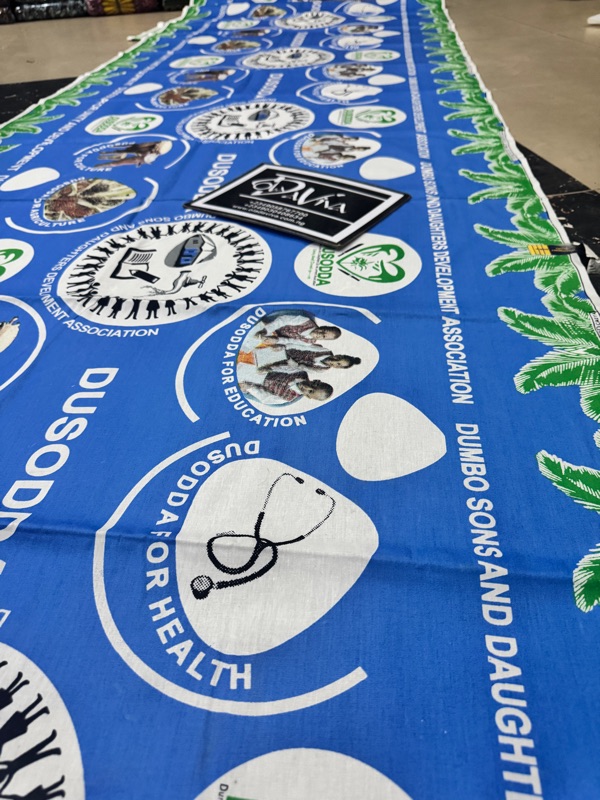
The Ankara fabric industry in Nigeria has evolved significantly over the years. Beyond traditional patterns and designs, Ankara fabrics are now being personalized for organizations, political parties, religious groups, schools, families, and special events. As a result, several terms have emerged in the market, including customized Ankara fabrics, custom Ankara, branded Ankara, and ceremonial Ankara fabrics.
Although these expressions are often used interchangeably, each term has a slightly different meaning and emphasis. Understanding the distinctions helps consumers, event planners, organizations, and fabric producers communicate their needs more effectively.
Why These Terms Are Often Used Interchangeably
In everyday conversation, Nigerians frequently use these terms to describe Ankara fabrics that have been specially designed for a particular purpose rather than purchased as ordinary retail prints.
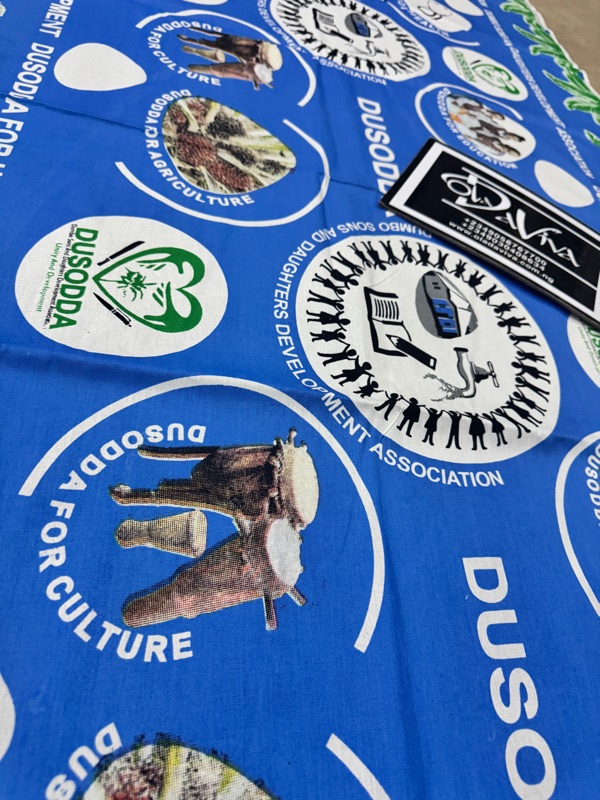
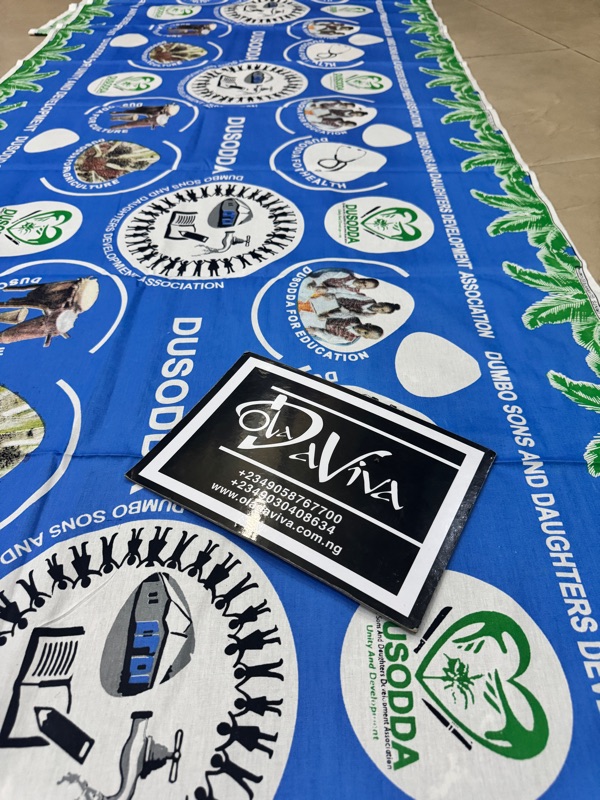
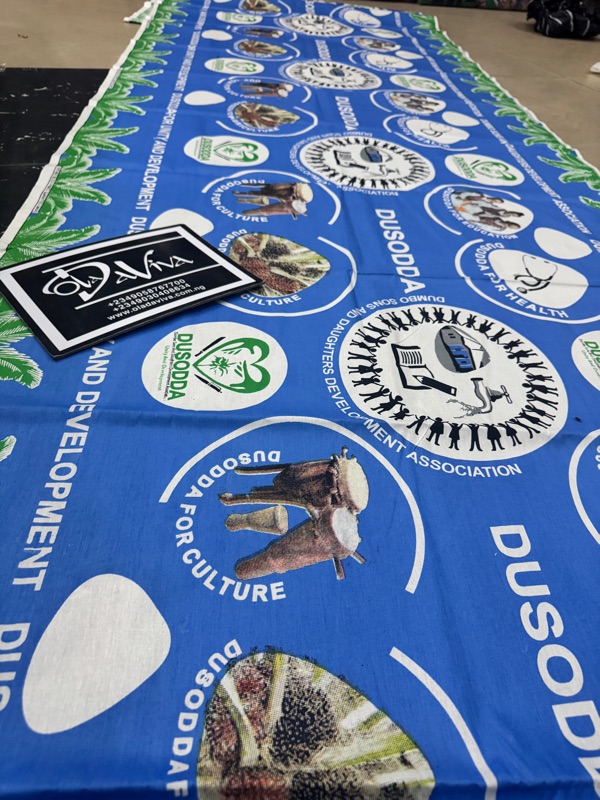
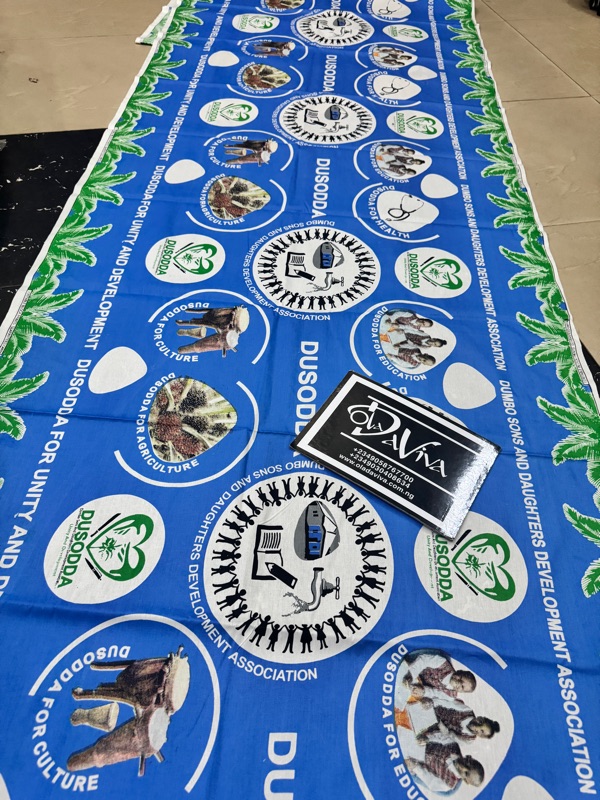
The overlap occurs because most customized fabrics often serve multiple purposes simultaneously. For example, a fabric produced for a church anniversary may contain the church logo, event date, and commemorative message. Such a fabric can accurately be described as:
- Customized Ankara fabric because it was specially designed.
- Custom Ankara because it was made to the client’s specifications.
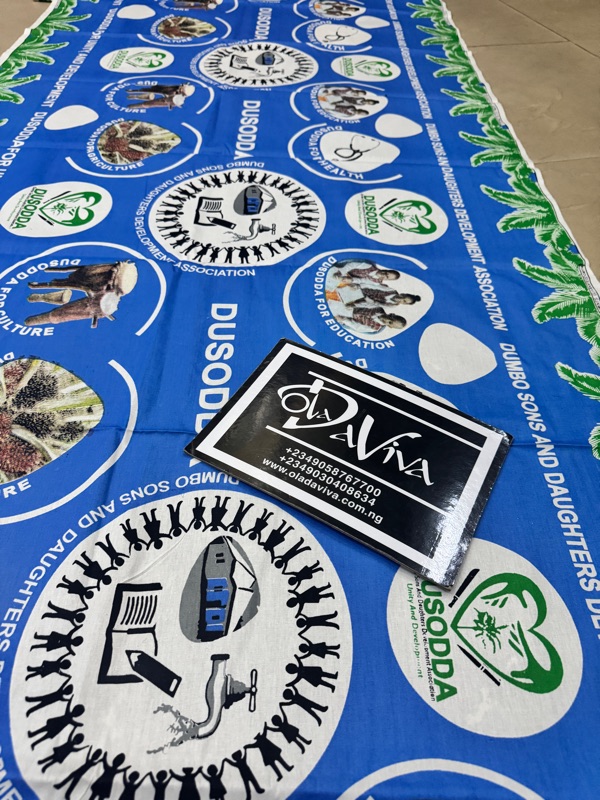
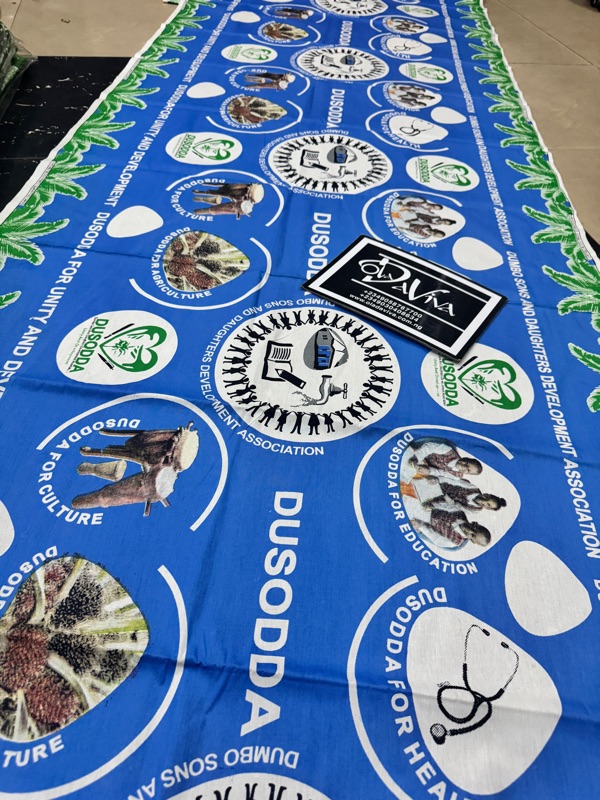
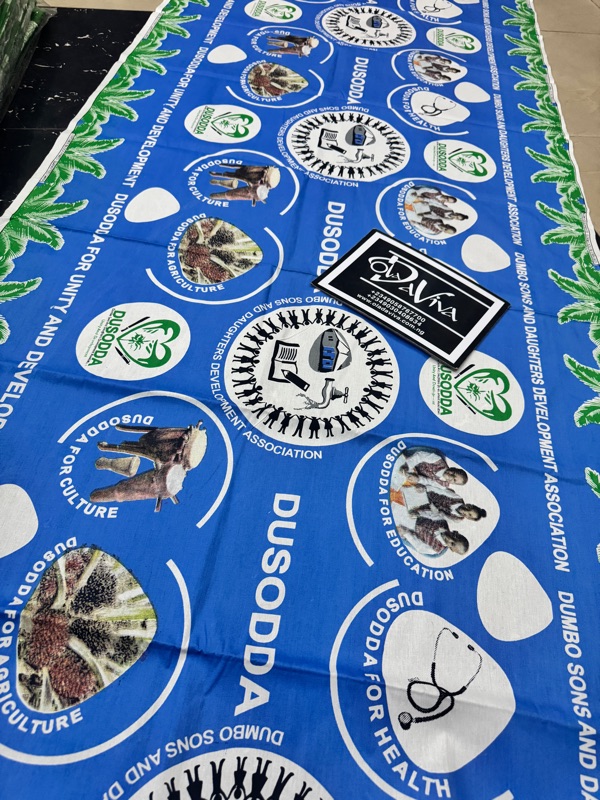
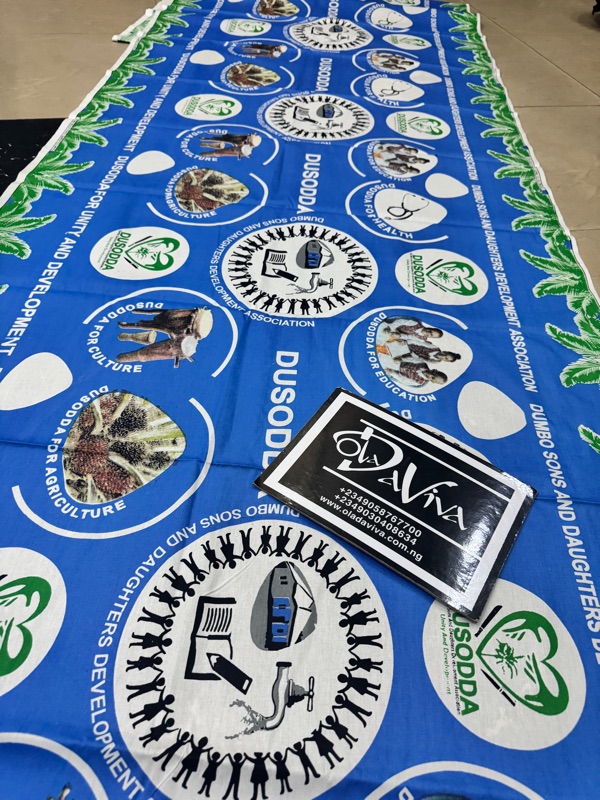
- Branded Ankara because it carries the organization’s identity.
- Ceremonial Ankara fabric because it was produced for a special event.
Because one fabric can satisfy all these descriptions, the terms naturally become interchangeable in commercial and social usage.
Customized Ankara Fabrics
The term customized Ankara fabrics is the broadest and most comprehensive expression.
It refers to Ankara fabrics that have been specially designed or modified according to a customer’s requirements. Customization may include:
- Names
- Photographs
- Logos
- Slogans
- Special messages
- Event dates
- Unique patterns and colors
The primary focus here is personalization. The fabric is no longer a generic design but a unique product created for a specific client, event, or organization.
Custom Ankara
Custom Ankara is essentially a shorter and more informal version of “customized Ankara fabrics.”
From a grammatical perspective, “custom” functions as an adjective modifying the noun “Ankara.” The expression is concise and widely used in marketing because it is easier to remember and communicate.
For example:
- Customized Ankara Fabric Production
- Custom Ankara Production
Both expressions communicate nearly the same idea. The difference lies mainly in style and brevity rather than meaning.
Branded Ankara
Branded Ankara emphasizes identity and recognition.
A branded Ankara fabric usually contains visual elements associated with a particular organization, institution, business, religious body, political party, or community.
Examples include fabrics featuring:
- Company logos
- Political party symbols
- School emblems
- Church identities
- Corporate colors
The objective is not merely decoration but brand representation and visibility. Therefore, while every branded Ankara is customized, not every customized Ankara is necessarily branded.
Ceremonial Ankara Fabrics
Ceremonial Ankara fabrics are fabrics specifically produced for special occasions and commemorative events.
Examples include:
- Weddings
- Burials
- Coronations
- Anniversaries
- Religious celebrations
- Cultural festivals
- Political conventions
The emphasis here is the event itself rather than the customization process. These fabrics often become keepsakes that preserve memories of important occasions.
Many ceremonial fabrics also contain personalized artwork, making them simultaneously customized and branded.
The Grammatical Difference Between the Terms
From a grammatical standpoint, the differences are subtle:
Customized Ankara Fabrics
This phrase uses the past participle “customized” as an adjective describing the fabric. It emphasizes the action performed on the fabric.
Example:
“The family ordered customized Ankara fabrics for the anniversary celebration.”
Custom Ankara
Here, “custom” functions as an attributive adjective meaning “made specifically for a person or purpose.”
Example:
“The committee approved a custom Ankara design.”
This construction is shorter and more conversational.
Branded Ankara
The adjective “branded” indicates that a brand identity has been incorporated into the fabric.
Example:
“The organization distributed branded Ankara during the conference.”
Ceremonial Ankara Fabrics
“Ceremonial” is an adjective indicating association with a ceremony or special occasion.
Example:
“The royal family unveiled ceremonial Ankara fabrics for the coronation.”
Therefore, while the terms overlap in practice, grammatically each adjective highlights a different aspect:
- Customized = personalization process
- Custom = specially made
- Branded = organizational identity
- Ceremonial = event purpose
Why Nigerians Prefer These Terms
Several factors contribute to the popularity of these expressions:
Identity and Belonging
Customized fabrics create a sense of unity among participants at events.
Cultural Expression
Ankara remains one of Africa’s strongest cultural symbols, making it ideal for storytelling and celebration.
Brand Promotion
Organizations increasingly use Ankara fabrics as branding tools.
Event Memorability
Specially designed fabrics help preserve memories and commemorate important occasions.
Fashion and Exclusivity
People enjoy wearing designs that cannot be found in regular fabric markets.
Ola Daviva and the Growth of Customized Ankara Fabrics in Nigeria
When discussing customized Ankara production in Nigeria, one name that frequently appears is Ola Daviva. Over the years, the company has built a reputation around personalized Ankara production for political organizations, religious institutions, educational establishments, corporate bodies, and private celebrations. (oladaviva.com.ng)
Ola Daviva has contributed to the popularity of customized Ankara fabrics by promoting large-scale personalization that allows clients to incorporate photographs, logos, names, event details, and branding elements into fabric designs. The company offers both full customization from scratch and more budget-friendly customization on existing fabric backgrounds, making personalized Ankara accessible to a wider range of customers. (oladaviva.com.ng)
Among the projects highlighted by the company are productions for political parties, religious organizations, educational institutions, cultural events, and commemorative ceremonies. The company has also reported producing fabrics for notable organizations and public events across Nigeria. (oladaviva.com.ng)
Some of the achievements associated with Ola Daviva include:
- Expanding awareness of customized Ankara as a branding and ceremonial tool.
- Serving political, religious, educational, and corporate clients across Nigeria.
- Offering multiple production categories to accommodate different budgets.
- Promoting the use of personalized fabrics for weddings, burials, anniversaries, conventions, and cultural celebrations.
- Contributing to the modernization of Ankara production through advanced printing techniques and design customization. (oladaviva.com.ng)
Through these efforts, Ola Daviva has become one of the recognizable names associated with customized Ankara fabric production in Nigeria’s textile and event-fashion industry. (oladaviva.com.ng)
Conclusion
The terms customized Ankara fabrics, custom Ankara, branded Ankara, and ceremonial Ankara fabrics are closely related and are often used interchangeably because they frequently describe the same product from different perspectives.
While “customized” emphasizes personalization, “custom” highlights special production, “branded” focuses on identity, and “ceremonial” points to event usage. Understanding these distinctions provides clarity, but in practical Nigerian usage, the terms often overlap because modern Ankara fabrics are designed to celebrate identity, promote unity, preserve memories, and showcase culture.
The growth of this segment of the textile industry has been supported by companies such as Ola Daviva, whose work in customized fabric production has helped expand the possibilities of Ankara beyond traditional fashion into branding, commemoration, and cultural expression.